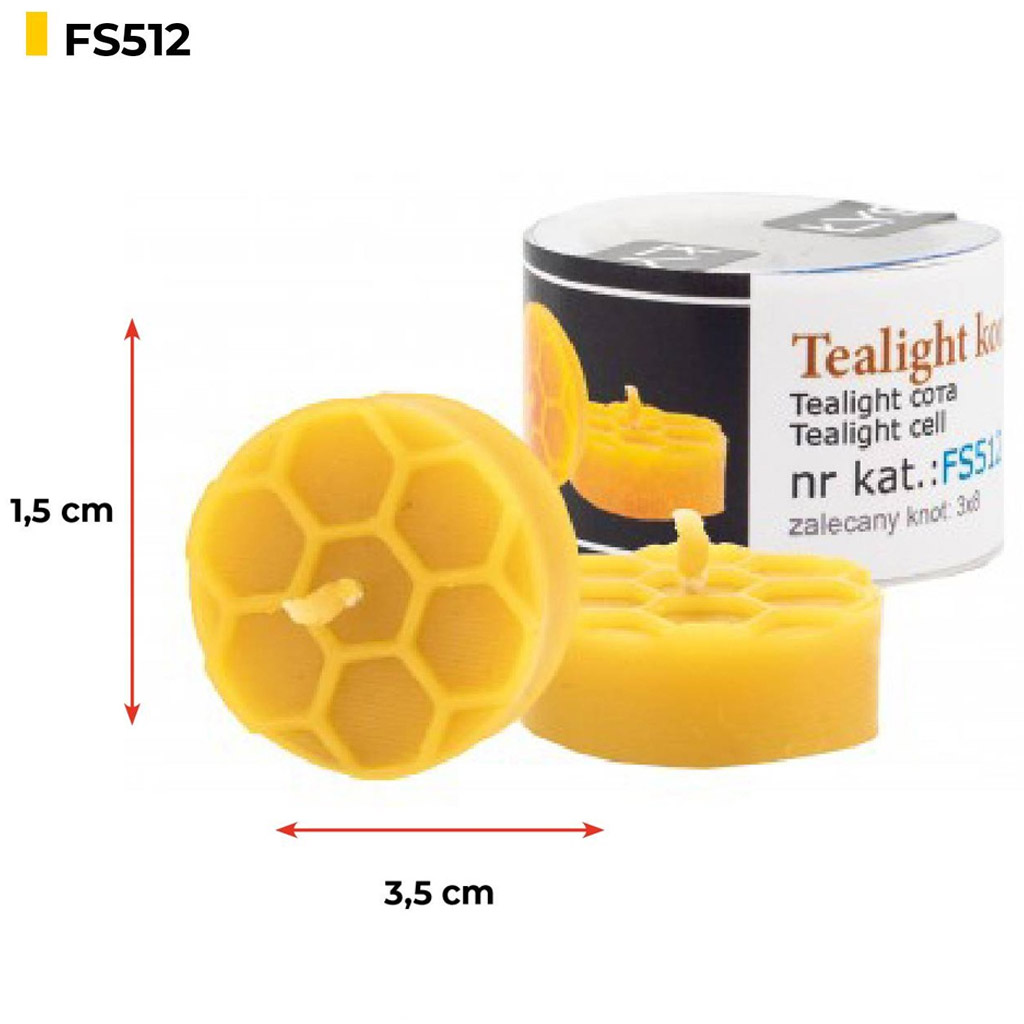
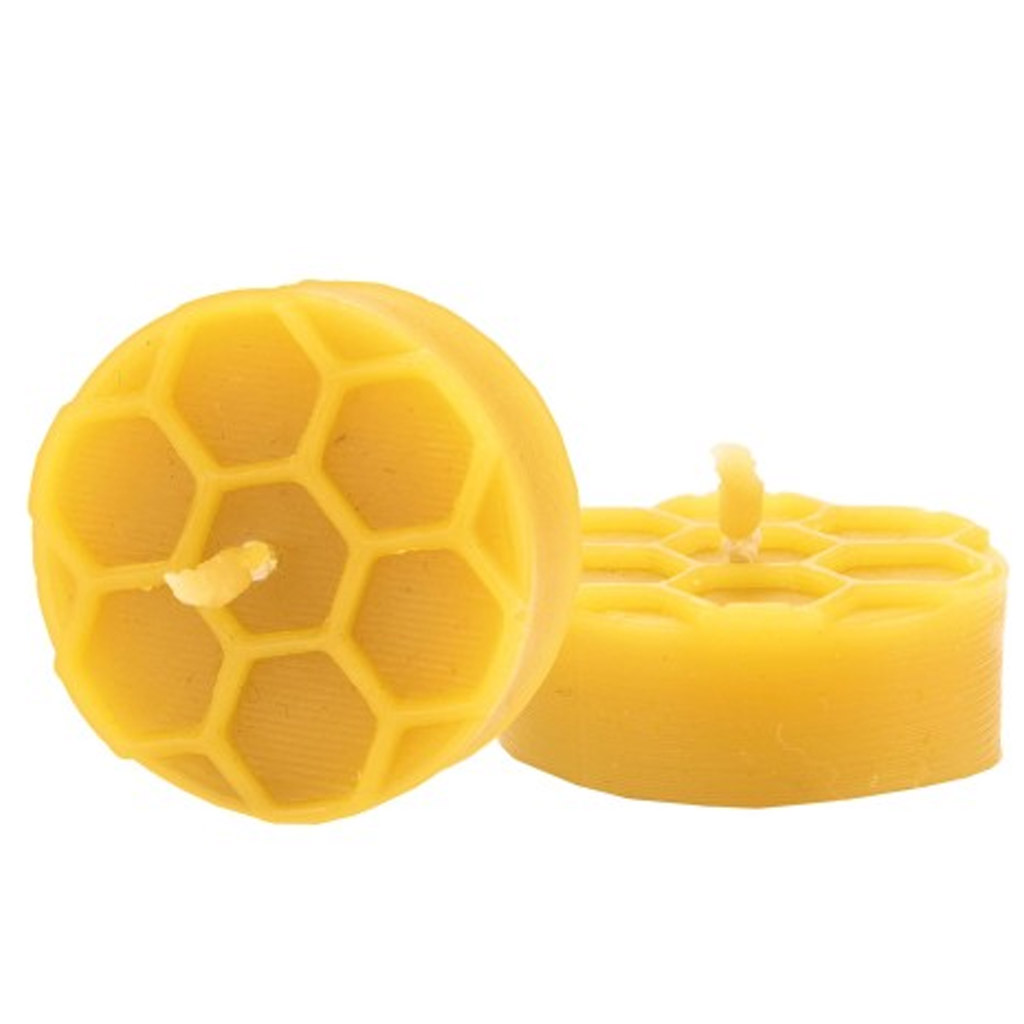
Silicone candle mold - tea light with honeycomb pattern - 1.5 cm - FS512
 In stock
Silicone mold for candles. Silicone mold for homemade candles from beeswax or paraffin. It is reusable mold. Size:
Silicone molds for beeswax candles - tea light with honeycomb pattern - 1.5 cm - FS512
The silicone mold is an ideal tool for home production of beeswax candles. It is made from durable and high-quality silicone that reliably handles the high temperatures of molten wax during pouring. Each mold is constructed from one piece and features a cut for easy removal of the finished candle, as well as for inserting the wick. The molds are designed for repeated use and their lifespan with proper maintenance is very long.
These silicone molds are not only suitable for beeswax, but you can also use them for working with soap, plaster, resin and other similar materials.
How to cast beeswax candles
Before first use, wash the mold thoroughly, especially if it has been unused for a longer period. Residual silicone oil may be released, which you can easily remove with soapy water or a cloth moistened with alcohol.
When casting candles, it is important to properly fix the wick. Use rubber bands (or several rubber bands) that are included in the package to hold the mold together. We do not recommend round rubber bands for conical molds as they may slip. For larger molds, choose rather firm knotting with string or use stretch film to strengthen the mold and prevent wax leakage.
It is recommended to pour wax into the mold at a temperature of around 100°C. During solidification, the wax volume shrinks and the wax tends to adhere to the mold walls. The resulting candle shape therefore also depends on the flexibility of the silicone itself. For better results, we recommend piercing the center of the candle during solidification and filling the created space with additional wax to ensure perfect shape without depressions.
With more complex molds with hollow details, small unfilled parts may occur during cooling - especially with prominent protrusions. You can easily solve this problem by first pouring a small amount of wax into these details and only then filling the mold to the required volume.