













 In stock


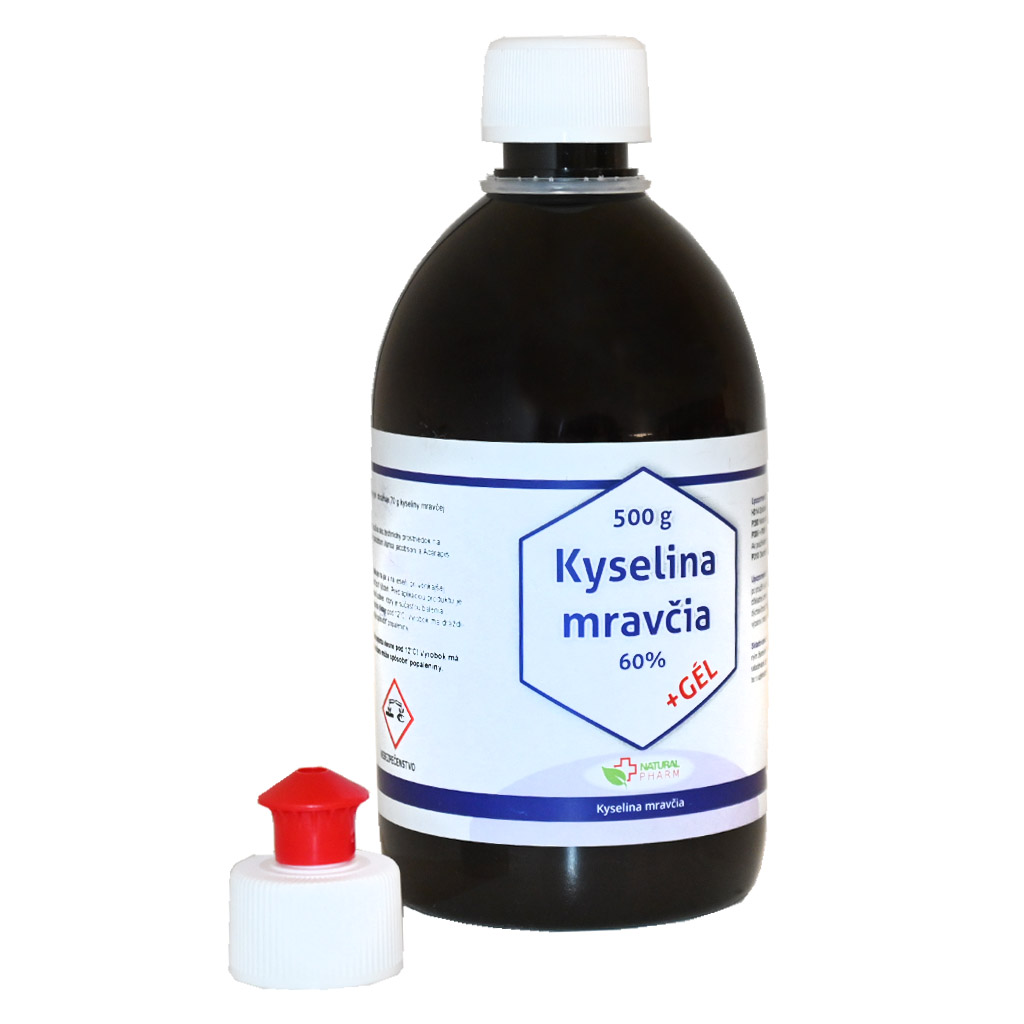
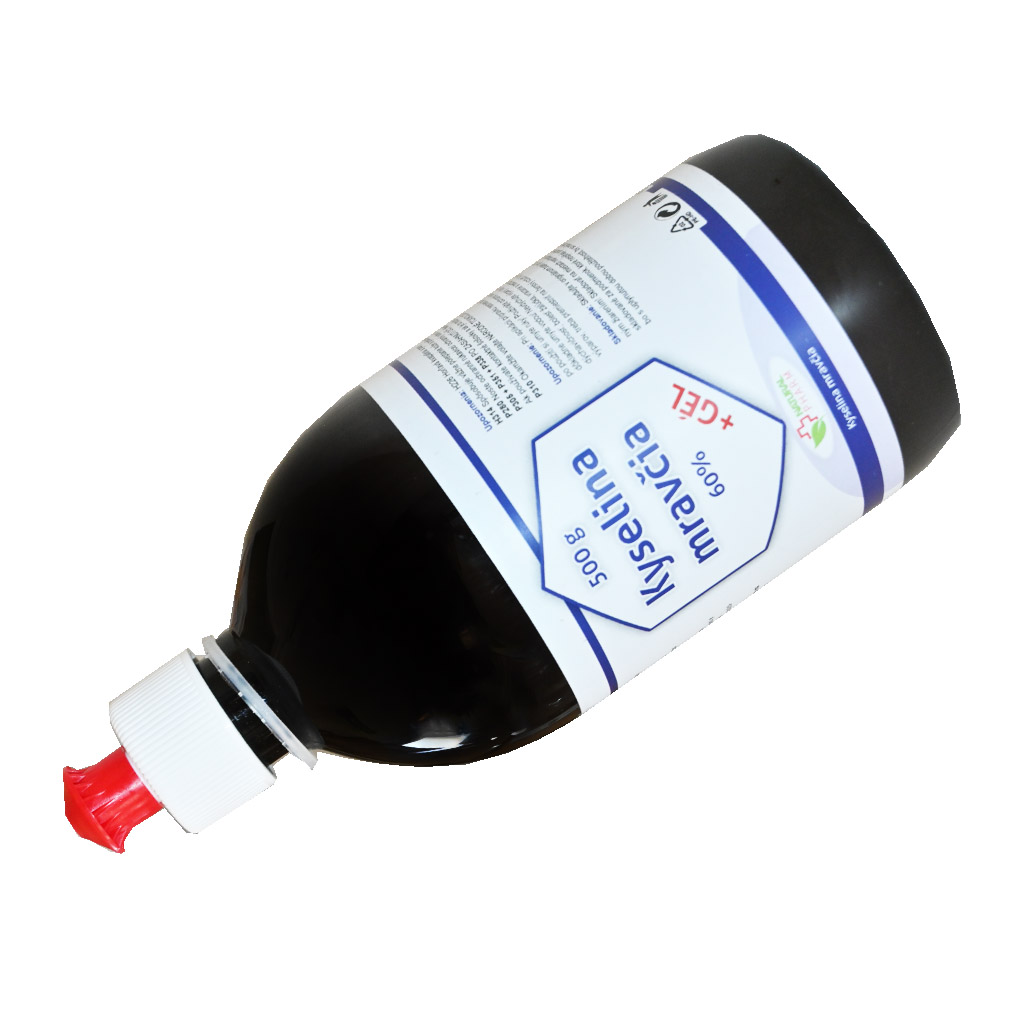
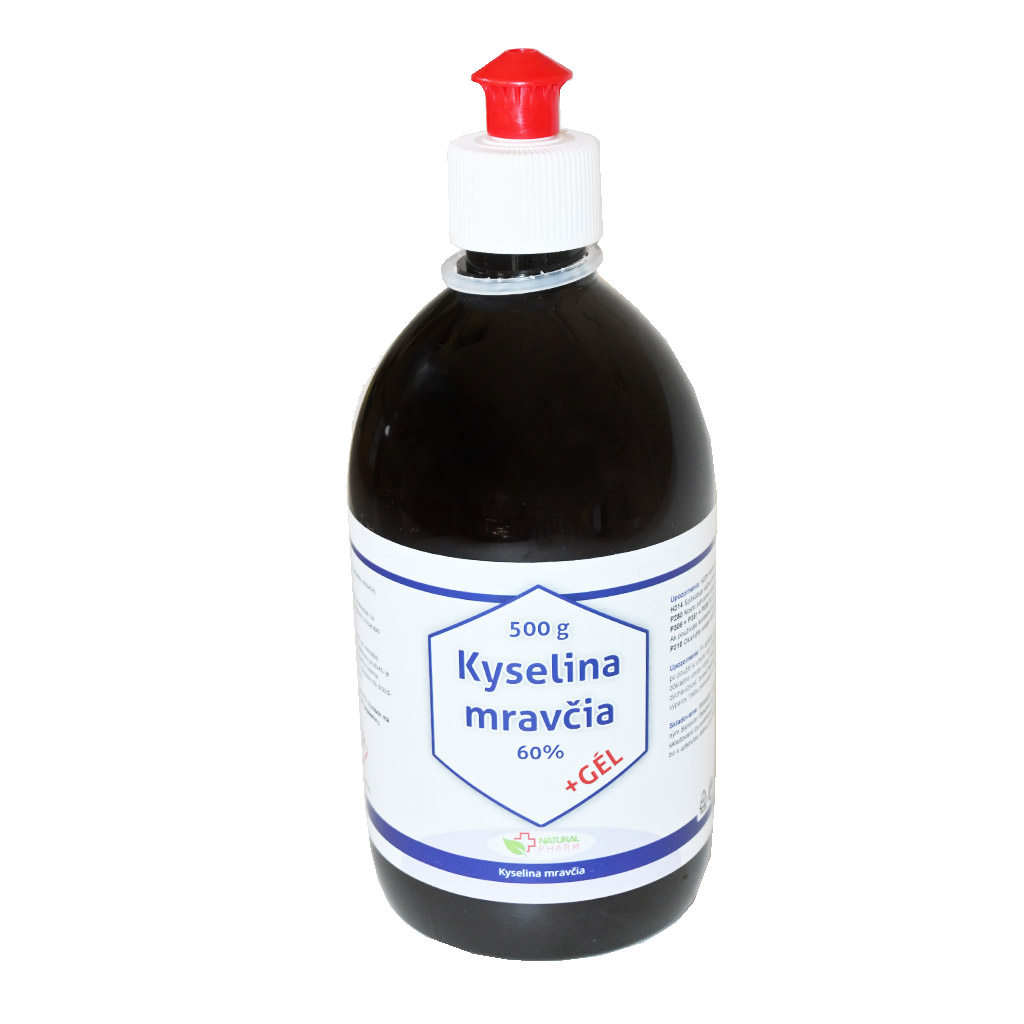
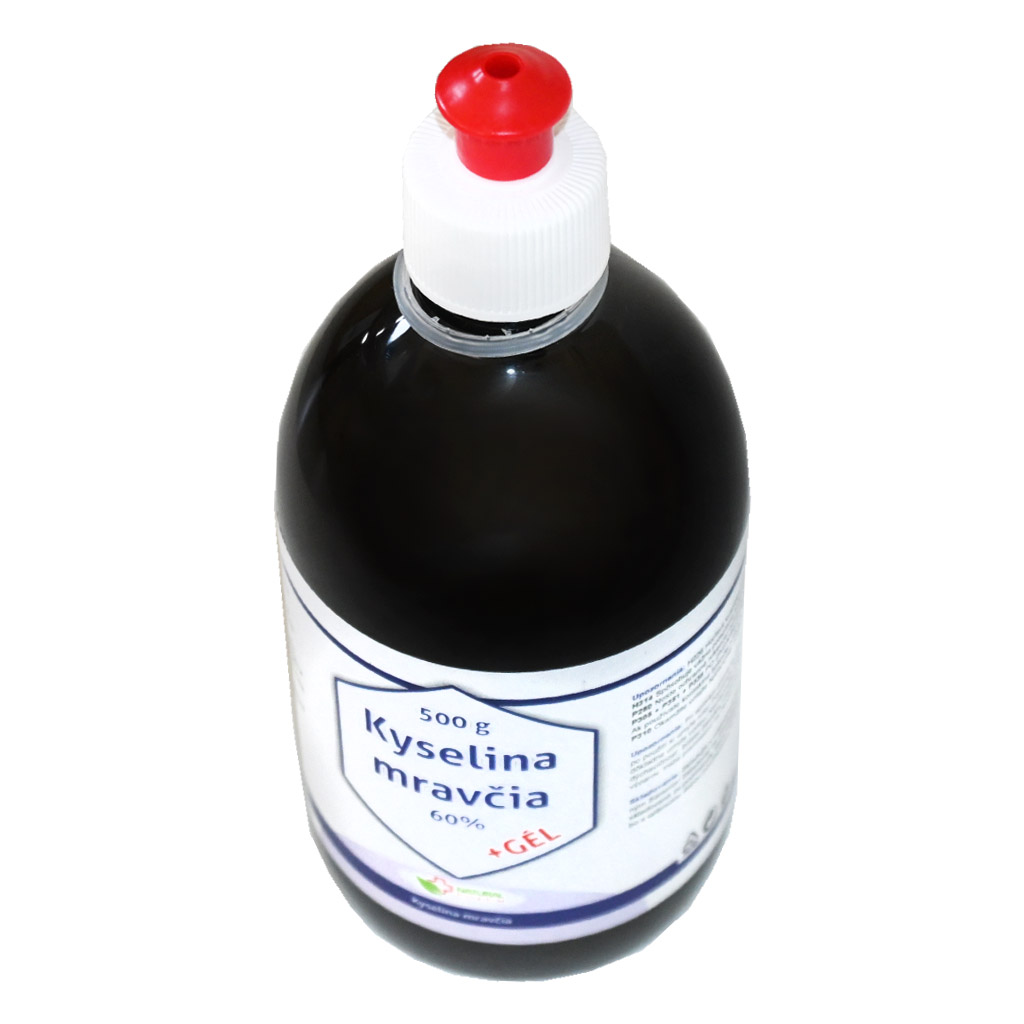
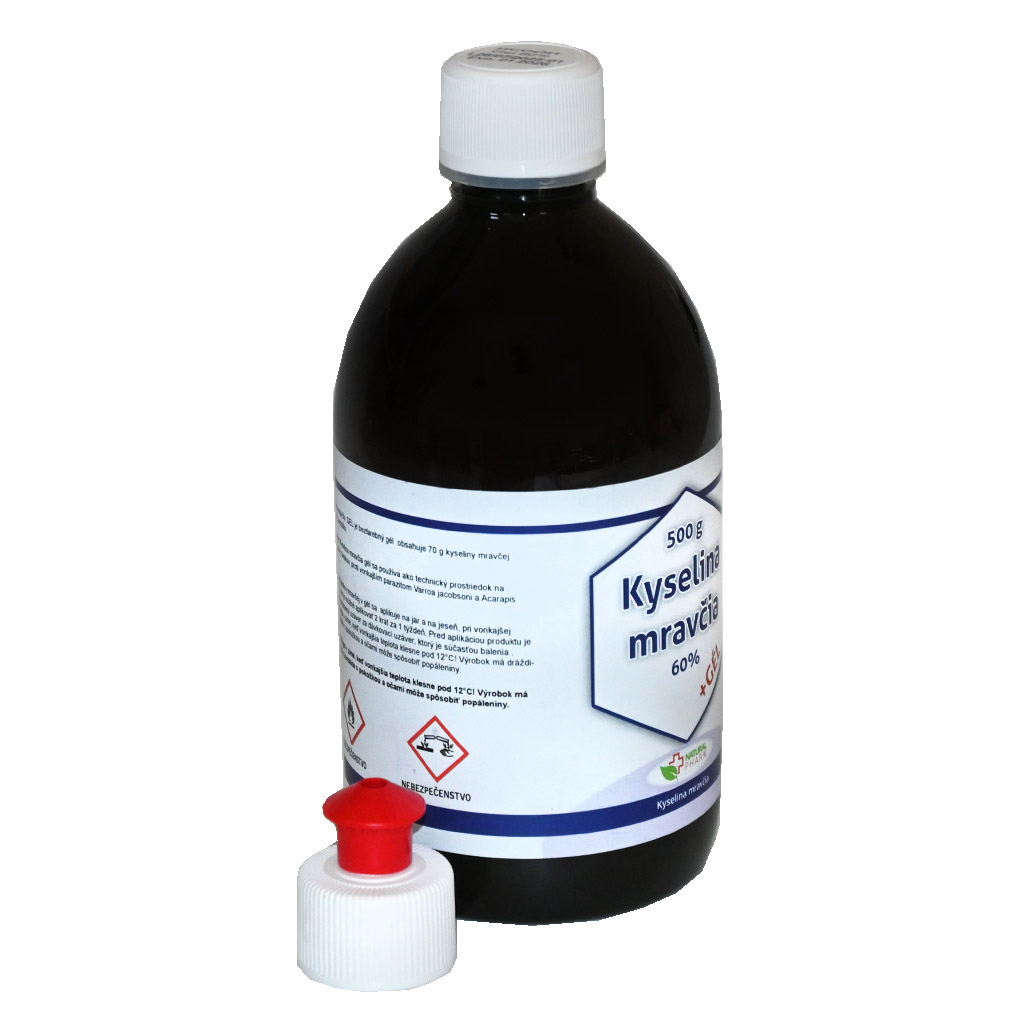
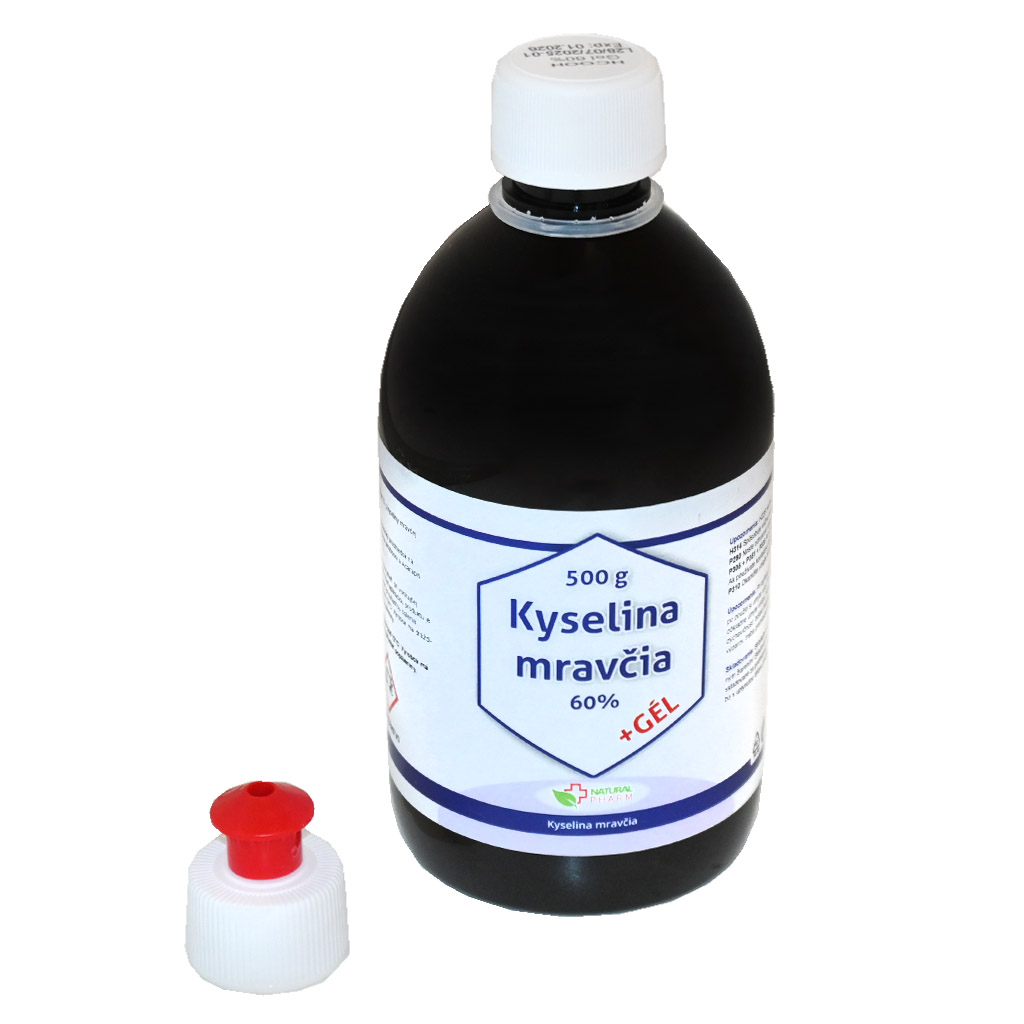
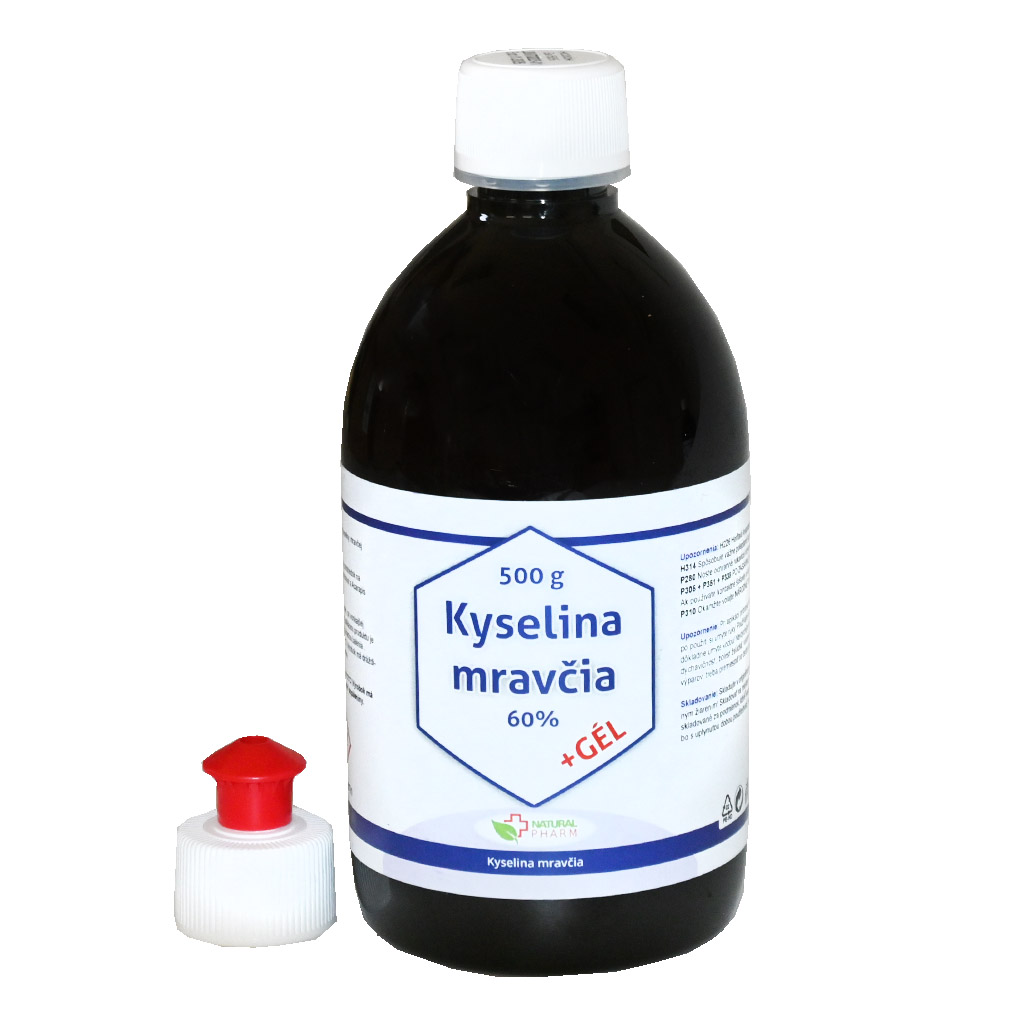
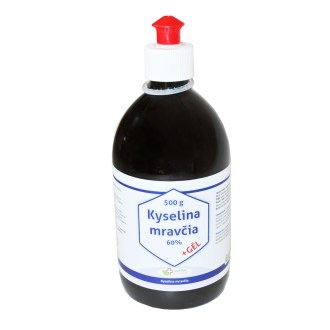
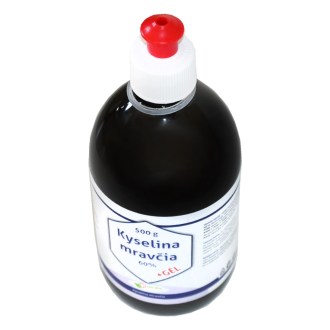
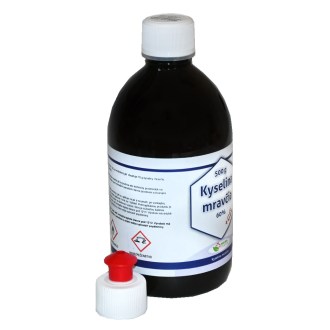
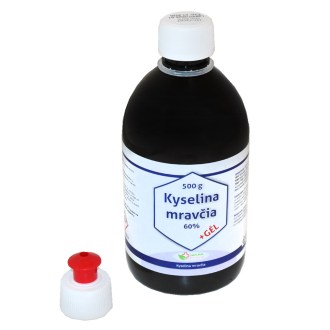
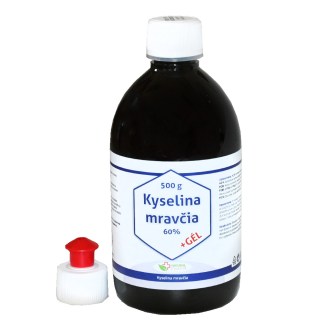
Formic Acid 60% Gel – 500 g Package
Formic acid in gel form(technical chemical, not approved as a veterinary medicinal product)
Composition:
Gel form of formic acid (HCOOH) with concentration as stated on the label (typically 60% – we recommend verifying before application).
Description:
The product is intended for technical and laboratory use – in beekeeping, it can also be used for disinfection of hives and beekeeping equipment.
How to use the remaining gel:
- After emptying the bottle, pour approximately 15 ml of pure 60% formic acid into the container.
- Shake the bottle thoroughly.
- Let it stand for 1–2 days.
- This will dilute the remaining gel, allowing you to use the entire volume of the contents.
Handle the acid with care and always follow the recommended safety procedures.
Storage conditions:
Store at room temperature, in a dry place and out of reach of children. Keep away from direct sunlight and seal the container tightly after each use.
Important safety warnings:
H314 – Causes severe skin burns and serious eye damage.
P280 – Wear protective gloves, clothing and eye protection.
P301+P330+P331 – If swallowed: Rinse mouth, do NOT induce vomiting.
P305+P351+P338 – If in eyes: Rinse cautiously with water for several minutes.
Xanthan Gum and Carbomer in Beekeeping, Food Industry and Cosmetics
Xanthan gum and carbomer serve as thickeners and stabilizers that find application not only in food and cosmetic production, but in some cases also in the preparation of auxiliary mixtures in beekeeping.
Xanthan Gum (E415)
- Origin: Xanthan is produced by fermentation of saccharides using Xanthomonas campestris bacteria.
- Uses:
- Food industry: Thickens yogurts, cheeses, dressings and syrups.
- Gluten-free baking: Improves dough structure and replaces gluten.
- Cosmetics: Stabilizes and adds thickness to emulsions and creams.
- Properties:
- Excellent water-binding capacity, increases viscosity and extends product shelf life.
- Stabilizes emulsions and improves product texture.
Carbomer
- Origin: Carbomer is a synthetically produced polymer of acrylic acid, used primarily for gel production and thickening of liquids.
- Uses:
- Cosmetics: Functions as a thickener, stabilizer and emulsifier in creams and gels.
- Medicine: Used in gel-based preparations.
- Beekeeping and other fields: Helps adjust the viscosity of certain mixtures, for example in the preparation of application gels for special purposes.
- Properties:
- Easily forms firm gels, ensures stability and uniform dispersion of ingredients.
- Dissolves in water and enables the production of homogeneous semi-finished products.
Main Differences Between Xanthan and Carbomer
- Xanthan is of natural origin, while carbomer is produced synthetically.
- Xanthan gum can also be used in gluten-free baking, whereas carbomer cannot.
- Carbomer is particularly suitable for gel formation, while xanthan is mainly used for thickening and stabilizing emulsions.
Combination of Xanthan Gum and Carbomer
The combined use of xanthan and carbomer is possible, for example, in cosmetic or food mixtures where a specific consistency or stability of the resulting gel, cream or emulsion is required. In some beekeeping technologies, these ingredients can help improve the applicability of gels and extend their effectiveness.